

SAFEGUARDING THE INTELLECTUAL PROPERTY OF ONLINE CONTENT CREATORS IN A TIME OF DIGITAL INVASION
July 16, 2025
THE LEGAL PERSPECTIVES OF SHIP ARREST AND MARITIME SAFETY
July 16, 2025
Nigerian mining laws and regulations

There are numerous investment prospects in the mining sector of the Nigerian economy. Crude oil, Coal, iron ore, bitumen, limestone, tin, gold, manganese, nickel, and other mineral resources are only a few of the many natural resources found in Nigeria. The nation’s mineral-rich mining industry has failed to garner major investments due to a lack of clarity in regulations, illegal mining, inadequate infrastructure, and security concerns. Mining is an extraction process that involves extracting mineral resources out of the earth. The Nigerian government has restored the mining industry back to existence through legislative and policy changes, which has increased investor confidence and made it a significant driver of economic expansion.
This article examines the current investors’ confidence level in Nigeria’s mining sector, highlighting the legal factors that influence investment decisions and sector growth.
REGULATORY FRAMEWORK GOVERNING THE NIGERIAN MINING INDUSTRY
The Laws which regulate the mining sector in Nigeria’s Legal Jurisprudence include:
- The Constitution of Federal Republic of Nigeria, 1999, as amended: The grundnorm for all other laws governing the mining industry is the Constitution. The Federal Government is granted full ownership and control of all minerals, mineral oils, and natural resources under or on any Nigerian land by the Constitution1.
- Minerals and Mining Act (2007): is the primary law governing the mining sector. It regulates all aspects of the exploration and exploitation of solid minerals in Nigeria. For instance, it provides that;
“No person shall search for or exploit mineral resources in Nigeria or divert or
impound water for the purpose of mining except as provided in this Act”2
- Nigerian Minerals and Mining Regulations, 2011: The Mining Regulations are the subsidiary legislation issued under the Mining Act. It contains detailed provisions for the administration of mineral titles by the Mining Cadastre Office(established under the Mining Act vis a vis its Section 5), including the procedure, duration and documentation required for the application of a small-scale mining lease and for the application for a permit to export minerals for commercial purposes. The Mining Act and the Mining Regulations are administered by the Ministry of Mines and Steel and the Mining Cadastre Office.
CHALLENGES UNDERMINING INVESTORS’ CONFIDENCE IN THE MINING SECTOR
- Conflicting Policies and Uncertain Regulations:
Historically, inconsistent policies in Nigeria’s mining sector have presented challenges to investors, such as overlapping regulations, slow licensing, and inconsistent law enforcement. Frequent policy reviews in mining, without effective implementation, have discouraged long-term investment. For instance, prior to the Minerals and Mining Act, 2007, Nigeria’s mining sector was largely informal, with unclear legal structures. Even after the Act, enforcement remained weak which has led to continued investor hesitation.
- Illegal Mining and Security Concerns:
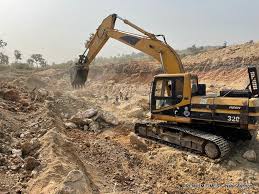
The substantial issue of illegal mining in Nigeria is particularly acute in gold-producing states including Zamfara, Osun, and Kaduna. The government loses revenue, and legitimate investors face security risks due to unregulated mining by armed groups and criminal networks.
- Infrastructure Deficits:
Inadequate infrastructure, including roads, power, and water, hinders mining operations in Nigeria’s mineral-rich zones. There are high operational costs due to inadequate infrastructure which makes Nigeria less competitive compared to other mining destinations. Many mining firms in Nigeria rely on diesel generators due to unstable electricity supply, significantly increasing production costs and reducing profitability.
- Administrative delays and Inadequate Investor Protection:
The Federal Ministry of Solid Minerals Development grants prospecting licenses to investors, both domestic and international, so they can take part in the exploitation of Nigeria’s abundant mineral resources. Historically, obtaining mining licenses in Nigeria has been a rigorous and long procedure. Concerns over poor legal protections, corruption, and difficulties enforcing contracts have also been raised by investors. Thus, foreign investors have faced difficulties repatriating profits due to forex restrictions and complex regulatory approvals, discouraging further investments in the sector.
CONFIDENCE-BUILDING MEASURES FOR MINING INVESTORS
- Mining legislation and regulatory framework
The Nigerian government has made initiatives to strengthen legal certainty in the mining sector, including legislative reforms and clearer regulatory frameworks. The 2007 Nigerian Minerals and Mining Act provided clearer standards for mining operations and investor safeguards. However, inadequacies in implementation have resulted in further amendments and updates.
In 2023, the government under President Bola Tinubu’s administration announced intentions to revise and modernize mining legislation in accordance with global best practices in order to maintain investors’ confidence.
- Establishment of the Mining Cadastre Office (MCO)
In order to increase the openness and effectiveness of the licensing procedure, the Nigerian Minerals and Mining Act of 2007 established the Mining Cadastre Office. To minimise administrative delays, this agency oversees the issuance and renewal of mining licenses.
As a result, an online cadastre system was established to facilitate the application and oversight of mining permits. Additionally, there will be less favouritism and corruption in the granting of mining permits.
- Prohibition of Illegal Mining and Enhancements to Security
It is crucial to make sure investors are protected. To protect mining investors’ rights, governments should enact legislation. This entails offering trustworthy dispute resolution procedures, plain and unambiguous contract conditions, and protection against capricious government acts.
To address illegal mining, the government has introduced stricter regulations and launched security initiatives to protect mining investments.
In 2020, the government set up the Presidential Artisanal Gold Mining Initiative (PAGMI) to formalize artisanal miners and integrate them into the formal economy.
- Infrastructure Development and Investment Incentives
To improve mining infrastructure and attract foreign direct investment (FDI), Nigeria has introduced tax incentives and public-private partnerships for infrastructure development. For instance, Tax incentives; Mining companies enjoy tax holidays and duty-free importation of mining equipment.
Investments in transport networks to link mining areas to export hubs, such as the development of the Ajaokuta-Kaduna-Kano (AKK) gas pipeline to support industrial growth.
FUTURE PROSPECTS FOR ATTRACTING MINING INVESTORS
Despite progress, Nigeria still faces challenges in fully restoring investors’ confidence in the mining industry.
- Need for Stronger Law Enforcement
Since many illegal mining operations continue to exist, stronger enforcement and monitoring systems are essential. For long-term investors’ trust, anti-corruption initiatives in the mining industry must be strengthened. ensuring that those who engage in this illegal mining receive the appropriate penalties.
Footage of an illegal gold mining site on Nigeria’s Osun River.
- Enhancing Security Measures
Security and stability in mining sites are crucial for lowering the risks that could arise from social or political unrest and conflicts. Consequently, adequate security measures must be put in place to protect mining operations and employees. This would establish a safe and secure environment that will promote investment.
- Further Legal and Policy Reforms
In order to draw in international investors, the government should regularly update mining laws to conform to best practices around the world. Competitiveness can be increased by implementing more investor-friendly regulations for mining investors.
CONCLUSION
Significant changes have been made to Nigeria’s mining industry to boost investor trust, including increased transparency, legislative restructuring, and initiatives to stop illicit mining. Although there has been progress, more has to be done to improve infrastructure, security, and investor protections. Nigeria could transform its mining sector into a significant economic driver by following this path, which involves drawing in both domestic and foreign capital while guaranteeing sustainable resource management.
Reference.
-
- 1. Section 44(3) of the Constitution.
- 2. Section 2(1) of Mining Act.
- Nigeria’s Mining and Metal Sector Investment Promotion Brochure, August 2016<https://msmd.gov.ng/wp-content/uploads/2022/09/Nigeria-Ministry-of-Solid-Minerals-Investment-BrochureV11.pdf >
- African Mining Legislation ATLAS <https://www.a-mla.org/ >
- Camillus Eboh, ‘Nigeria to set up solid minerals corporation to attract investment’ <https://www.reuters.com/markets/commodities/nigeria-set-up-solid-minerals-corporation-attract-investment-2023-09-03/ >
- Image of “Footage of an illegal gold mining site on Nigeria’s Osun River” sourced from “Pollution, Corruption, and Illegal Gold Mining: Investigating Nigeria’s Water Crisis” by patrick-egwu <https://gijn.org/stories/investigating-nigeria-water-crisis/ >
- Section 5 of Nigerian Minerals and Mining Act, 2007.
CLICK THE LINK BELOW TO DOWNLOAD THIS ARTICLE
RESTORING INVESTORS CONFIDENCE IN THE MINING INDUSTRY AND THE LAW
ALSO READ
SAFEGUARDING THE INTELLECTUAL PROPERTY OF ONLINE CONTENT CREATORS IN A TIME OF DIGITAL INVASION


